The real problem is clarity
EasierInvoice exists because a lot of small service businesses do not really have an invoicing problem. They have a clarity problem. The invoice gets created somewhere. The payment lands somewhere else. Recurring work lives in a customer note or an old list. Expenses end up in another tool or a spreadsheet. Then at the end of the month somebody has to rebuild the whole picture by hand.
That spreadsheet usually starts with good intentions. It becomes the backup source of truth for what was sent, what was paid, what still needs a reminder, which monthly services are still active, and what the month actually looked like after costs. It is useful, but it also means the business is doing the same translation work every month.
Why the spreadsheet keeps winning
Spreadsheets win because they are flexible. If the billing workflow is fragmented, the spreadsheet becomes the only place where everything can sit next to everything else. Owners can add notes, mark overdue payments, estimate next month, and manually fix the missing context that the software around them never carried forward.
But that flexibility comes at a cost. The spreadsheet usually has to be updated after the fact. It is one more surface to maintain, one more place for a number to drift, and one more workflow that depends on memory.
What EasierInvoice is trying to do instead
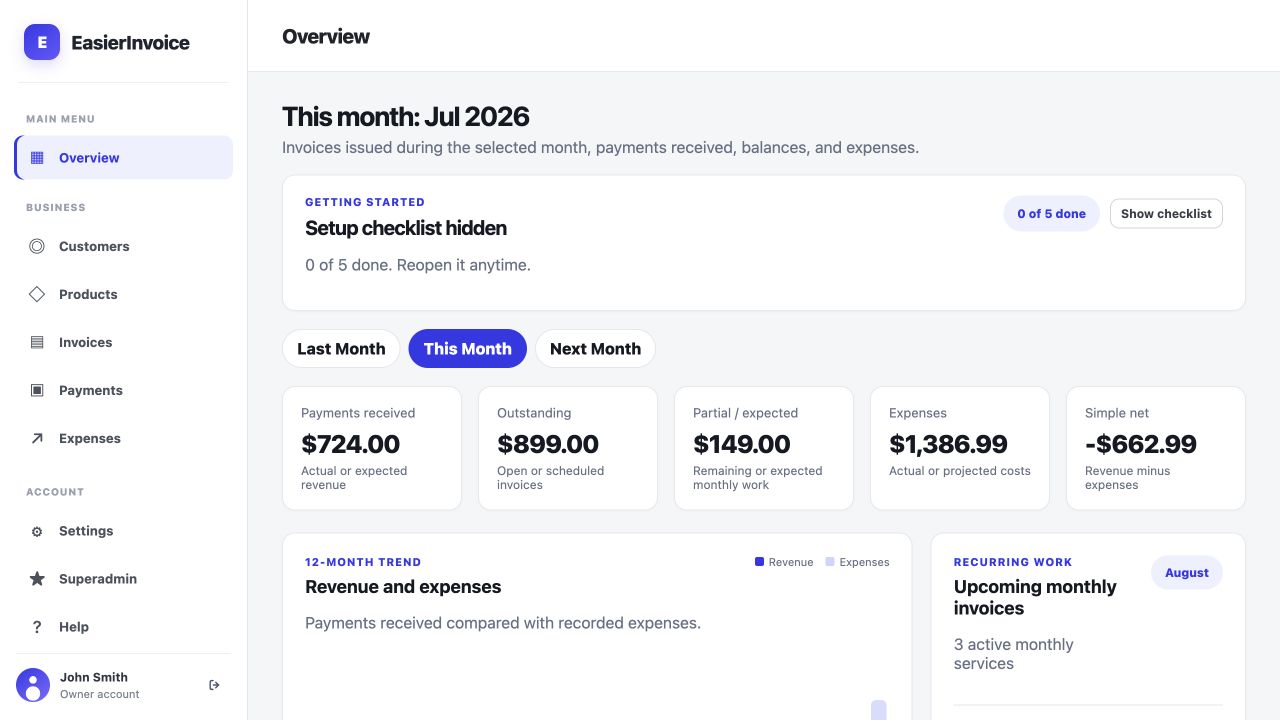
EasierInvoice is meant to keep the customer, product, invoice, payment, and expense story closer together from the start. A recurring monthly service should still be visible when you open the customer. An invoice status should stay honest. A payment should update the month without another side list. Expected next month should be based on active recurring work, not guesswork.
That is why the product is intentionally narrower than a full accounting suite. The goal is not to do everything. The goal is to make billing feel easier to follow and easier to trust for smaller service teams.
Hence EasierInvoice
The name is simple on purpose. Invoices are part of it, but the bigger idea is that the work around invoices should feel easier too: payments, recurring services, month-end follow-up, and understanding whether the month was actually good.
If a business can stop rebuilding the same billing story in a spreadsheet every month, that is the point. That is the product.